
.png?width=80&height=27&name=image%20(6).png "image (6)")
Digital Orthodontics and Clear Aligners Biomechanics: From Virtual Staging to Predictable Outcomes
Madinat Jumeirah Arena & Conference Center | Dubai | UAE
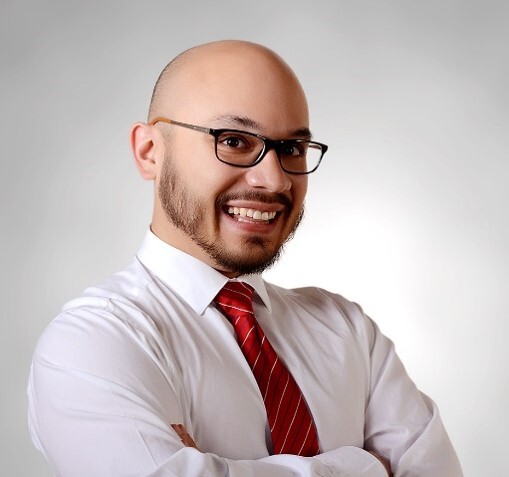
Dr. Suliman Shahin
Abstract
This advanced clinical session explores how modern biomechanical principles can be elevated and adapted to maximize predictability in Invisalign treatment. Dr. Suliman Shahin will guide participants through force systems, staging strategies, attachment design, and the integration of auxiliaries to manage both growing patients and complex adult malocclusions. The session emphasizes practical, evidence-based approaches that enhance treatment efficiency and clinical outcomes.
Dr. Suliman Shahin graduated top of his class with honors from King Abdulaziz University College of Dentistry in 2007, earning a Bachelor of Dental Surgery.
He later earned his Certificate of Advanced Graduate Studies (CAGS) and a Doctorate of Science Degree (DScD) in orthodontics and dentofacial orthopedics from Boston University Henry M. Goldman School of Dental Medicine, USA.
He subsequently earned a Fellowship in Surgical and Craniofacial Orthodontics from Case Western Reserve University School of Dental Medicine, USA.
Dr. Shahin is a Fellow of the Royal College of Dentists of Canada in orthodontics and a Diplomate of the American Board of Orthodontics.
He is actively involved in lecturing nationally and internationally on Invisalign treatment.
Dr. Shahin is a Diamond II Invisalign provider and the first Invisalign speaker from the Middle East, and he maintains a practice exclusively dedicated to clear aligner therapy using Invisalign.
He is Vice Dean and Assistant Professor of Orthodontics at Imam Abdulrahman Bin Faisal University College of Dentistry, and a member of the Board of Directors of the Saudi Orthodontic Society.
His research interests are clear aligner therapy and CBCT superimposition.
- Apply advanced biomechanical principles to optimize clear aligner treatment planning.
- Understand how force systems differ between aligners and fixed appliances.
- Design predictable staging for challenging movements (extrusion, rotation, torque, intrusion).
- Integrate auxiliaries (TADs, elastics, attachments) to enhance biomechanics.
- Improve outcomes in growing patients and complex adult cases.
- Identify biomechanical pitfalls that reduce predictability — and how to avoid them.